

 Beth Johnson
5 min read
What Healthcare Organizations Should Look For When Picking an IT Partner
Healthcare organizations don't just need IT support; they need a partner who understands compliance, security, and what's actually at stake when...
There is a major email security update from Microsoft that will disrupt scan-to-email workflows for many businesses unless action is taken before March 1st.
If your organization uses multifunction printers (MFPs), this will impact your ability to scan-to-email submissions through Office 365 or Exchange Online. Modern Authentication will replace Basic Authentication with more secure protocols such as OAuth 2.0 and SAML for cloud services.
March 1st, 2026, Microsoft will begin rejecting all Basic Authentication SMTP email submissions in Microsoft 365 and Exchange Online. By April 30th, 2026, Microsoft is aiming to have completely retired Basic SMTP Authentication. Businesses that have not updated their devices will not be able to scan-to-email at all. This change will retire legacy login methods that expose credentials (username and password) in plaintext to improve email security.
In simple terms, if your scanners or printers use a username and password to send email, they will stop working in 2026. You will need to update, reconfigure, or replace your devices to continue any scan-to-email functionality.
Basic Authentication requires a static username and password to connect to the Microsoft 365 SMTP service. These credentials are transmitted in a way that makes them vulnerable, increasing the risk of credential theft, phishing, and brute-force attacks. Microsoft's discontinuation of this login method is part of a broader move towards more secure Modern Authentication workflows.
Modern Authentication uses advanced methods like OAuth 2.0 authentication, which replaces passwords with temporary tokens when scanned documents are sent via email. Instead of storing a username and password on the device, tokens are issued and validated securely, reducing credential exposure.
This means that new scan-to-email setups rely on token-based permissions, supporting identity and access controls, unlike basic authentication, which uses older, insecure login flows.
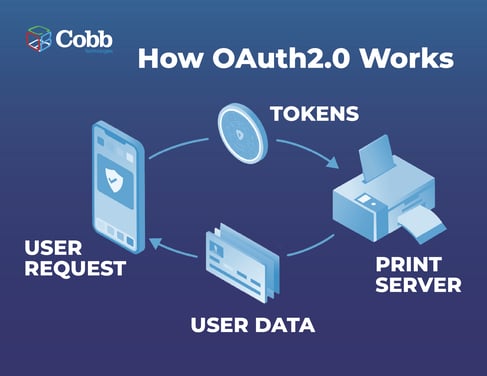
OAuth 2.0 improves security by eliminating the need for static login credentials during the scan-to-email process. Using temporary access tokens ensures that credentials aren’t stored on the device or transmitted in plaintext, which is a core weakness of Basic Authentication.
This token-based security method also supports stronger compliance requirements and reduces risk for organizations concerned about data breaches, credential theft, and unauthorized access.
Any multifunction printer (MFP) scan to email setup or other device that uses Basic Authentication with Microsoft 365 or Exchange Online SMTP will be affected when authentication stops working in March.
Businesses that rely on Basic Authentication will be unable to send scanned files by email, which leads to print workflow problems that interrupt document processes that many teams depend on for approvals, invoicing, onboarding, and records management.
Fortunately, most major MFP manufacturers, including HP, Konica Minolta, Canon, and others, have published guidance acknowledging the impact. t
To avoid disruption to your workflows, consider taking these steps:
Audit Devices
Inventory all multifunction printers and scanners that use scan-to-email with Microsoft 365 or Exchange Online. Older devices without OAuth 2.0 support will fail after the deadline.
Verify OAuth 2.0 Compatibility
Check with your manufacturer or vendor to confirm whether firmware updates enable OAuth 2.0 Modern Authentication. If no update path exists, the device won’t be able to authenticate with Microsoft’s servers.
Select a Transition Approach
Organizations generally have three options:
OAuth 2.0 Modern Authentication - For devices that support token-based logins.
SMTP Relay - Uses an Office 365 relay secured by IP instead of device-level credentials.
Alternative Email Services - Third-party SMTP or print management platforms (e.g., uniFLOW, PaperCut) that offer scan-to-email functionality.
This authentication shift impacts not just scan-to-email but the broader print workflow problems that occur when fundamental services change. When a workflow, such as emailing scanned documents, suddenly stops working, teams lose time and productivity. You will need to update or replace devices that use basic authentication. By doing so, organizations can ensure that critical document workflows stay uninterrupted and continue to support day-to-day operations.
Managing these transitions can be a daunting task, keeping you from focusing on what matters most. For businesses to take control of print costs and fleet performance, looking to reduce waste, right-size equipment, and gain visibility into real print behavior, Cobb’s Managed Automated Print Services (MAPS) program offers a complimentary Fleet Assessment. It’s a simple first step to uncovering cost drivers, usage patterns, and opportunities for a more efficient print environment, making sure your devices work for you, not against you.
If you’re seeking expert guidance, troubleshooting support, or want to explore workflow improvements, our team is ready to help. Schedule a call with our service or sales specialists, and we’ll walk through your questions, goals, or upcoming initiatives to help you move forward with clarity.
Works Cited:
Microsoft Exchange Team Blog - “Exchange Online to Retire Basic Auth for Client Submission (SMTP AUTH)” - Microsoft Tech Community
https://techcommunity.microsoft.com/blog/exchange/exchange-online-to-retire-basic-auth-for-client-submission-smtp-auth/4114750
"How to Fix Scan to Email: Understanding Issues and Solutions" https://www.cobbtechnologies.com/blog/troubleshooting-scan-to-email-issues
Xerox — “Exchange Online Authentication Changes: OAuth 2.0 Support”
https://www.xerox.com/en-us/office/insights/exchange-online-authentication
Canon — “Using A Cloud Mail Scanner with OAuth2.0"
https://oip.manual.canon/USRMA-8183-zz-CS-3900-enAU/contents/devu-setup-cloud.html
Konica Minolta — “OAuth 2.0 Support Notice for SMTP Authentication” (PDF)
https://www.konicaminolta.com/global-en/security/notices/pdf/OAuth2.0_support_notice_for_SMTP_authentication.pdf

5 min read
Healthcare organizations don't just need IT support; they need a partner who understands compliance, security, and what's actually at stake when...
9 min read
 Jason Holmes: Jul 28, 2026, 8:53:17 AM
Watch Our Patching and Updating Video Below
8 min read
 Chris Wilson: Jul 1, 2026, 8:00:00 AM
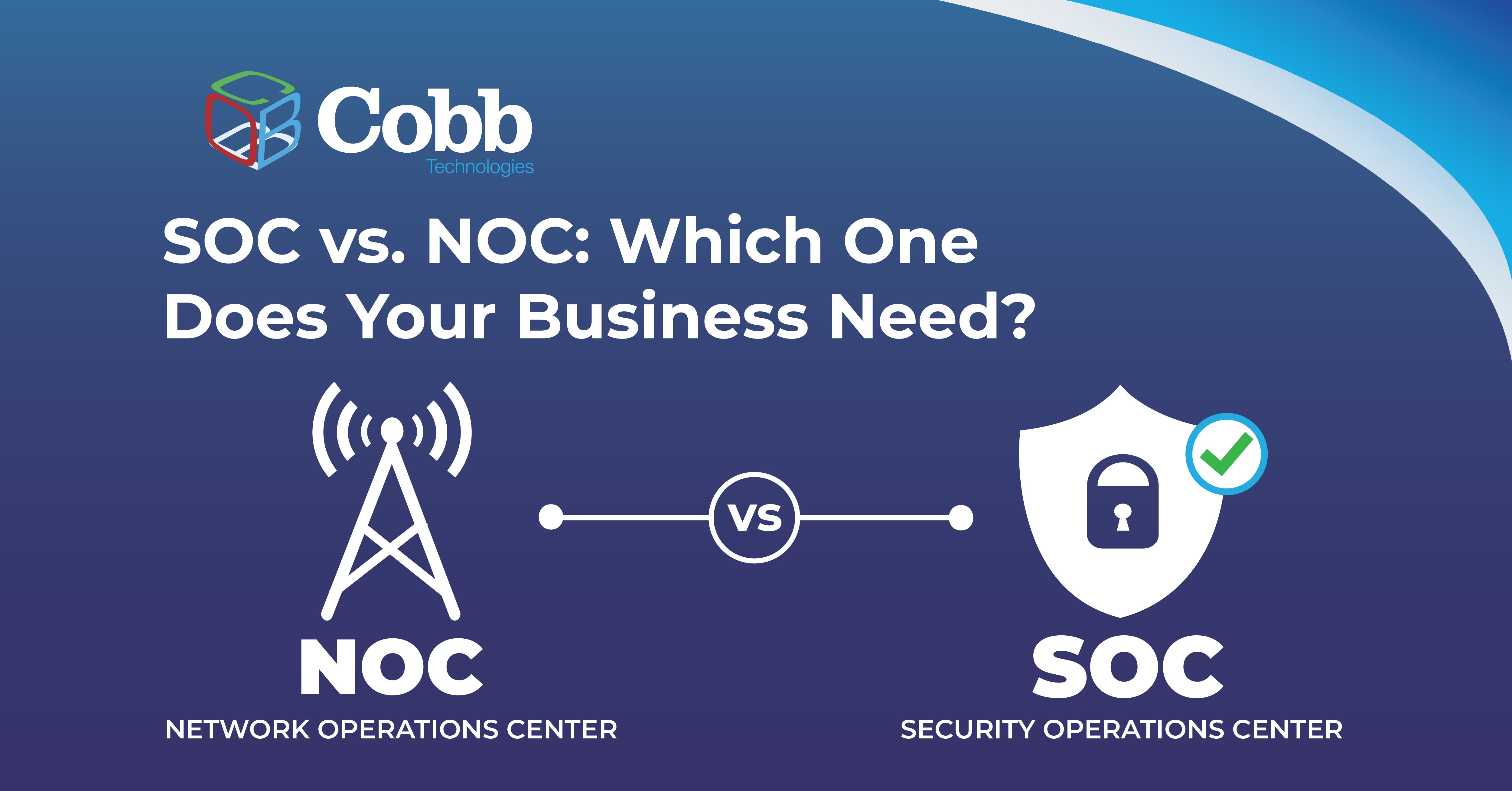
As businesses grow more reliant on digital infrastructure, the need to maintain both system performance and security becomes harder to manage...