

3 min read

"The Godfather of Silicon Valley" Roy Lee Clay Sr.

"The Godfather of Silicon Valley" Roy Lee Clay Sr.
5:44

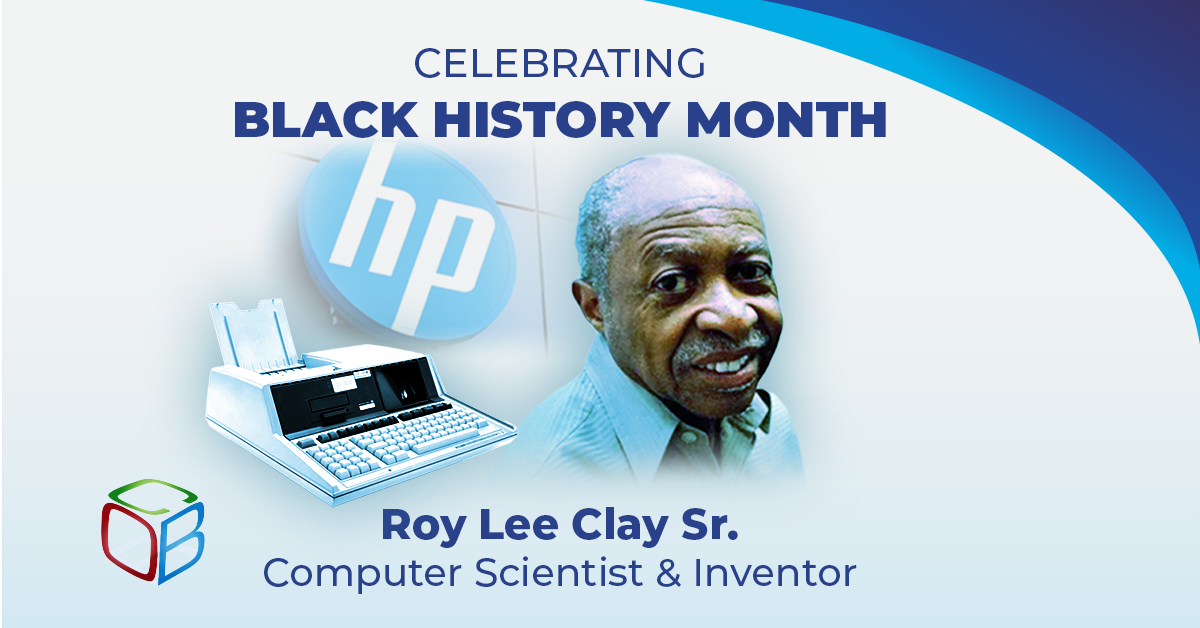
In honor of Black History Month, we want to take a moment to highlight the brilliance and innovation of Roy Lee Clay Sr, an inventor recognized for pioneering the study of computer science. Clay Sr. was one of the founders of HP's computer division, where he directed the development of HP's first minicomputer.

Throughout his career, he also helped establish initiatives that expanded access and representation for African Americans in the technology industry. Due to his technical contributions and his mentorship within the industry, Clay would eventually become known as the “Godfather of Silicon Valley.”


Born in 1929 to Charles & Emma Jean Clay in Kinloch, Missouri, Roy was one of nine children. His father worked as maintenance for an electrical company, and his mother was a seamstress. Clay received his high school diploma from Douglass High School and later his bachelor's degree in math from Saint Louis University.

Despite having the education and experience, Roy faced adversity at every turn and was kept from many career opportunities due to segregation. During the Jim Crow Era, racial segregation was enforced, restricting the rights and economic mobility of African Americans. This directly affected nearly every part of daily life: schools, housing, transportation, and employment opportunities.

Even after the dismantling of Jim Crow Laws and the passing of the Civil Rights Act of 1964, which outlawed employment discrimination based on race, color, religion, sex, or national origin, many workplaces still refused to hire Black applicants regardless of qualifications. At one interview, he was told, "We don't hire professional negroes".

Nevertheless, Roy kept moving forward, crediting his mother for instilling the importance of education and purpose early in his childhood. She warned Roy that "You will face racism the rest of your life, but don't ever let that be a reason why you don't succeed." With the gatekeeping of the ever-changing tech industry of computer science, Clay began teaching himself how to write software and went on to secure a position as a programmer at Lawrence Livermore National Laboratory, where his technical abilities quickly became evident

The words of Roy's mother were eventually supported by the Civil Rights Act of 1964, which deemed it unconstitutional to discriminate based on race, color, religion, sex, or national origin, although the opportunities still did not come easily. After working as a teacher, Roy taught himself how to write software and began working as a programmer at Lawrence Livermore National Laboratory.

By 1965, Clay joined Hewlett-Packard and became one of the founders and the director of its new Computer Science division. At the time, HP was primarily known as a manufacturer of electronic test and measurement instruments, not computers. The technology world was dominated by large, room-sized mainframe computers produced by companies like IBM. These machines were powerful but extremely expensive and accessible only to large corporations and government agencies.

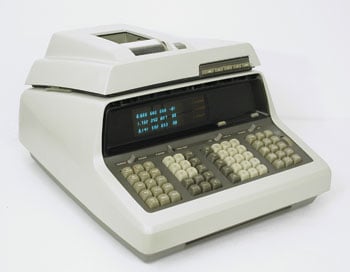
Clay and his team helped change that. In 1966, they developed HP’s first mini computer, the HP 2116A. Unlike mainframes, minicomputers were smaller, more affordable, and designed to directly control laboratory equipment and industrial processes in real time. The HP 2116A used a 16-bit architecture, magnetic-core memory, and ruggedized engineering so it could operate reliably in laboratory and manufacturing environments rather than climate-controlled computer rooms. This design allowed engineers and researchers to interact with computing power much closer to their work, causing a major shift in how computers were used.

Image of HP 2116A minicomputer against white background

The success of the 2116A was critical for Hewlett-Packard. It allowed the company to compete in the rapidly evolving computing market and marked HP’s transition from an instrumentation company into a true computer technology firm. The product line that followed laid the groundwork for HP’s future role in personal computing and enterprise systems. Clay’s leadership, technical vision, and practical understanding of customer needs were central to that transformation.

Clay’s contributions extended far beyond engineering. Throughout his career, he advocated for diversity in the technology sector and worked to increase opportunities for African Americans entering technical professions. After leaving HP in 1971, he founded his own company, ROD-L Electronics, which manufactured electrical safety-testing equipment.

In 2003, Clay Sr. was inducted into the Silicon Valley Engineering Council Hall of Fame, solidifying his name as "The Godfather of Silicon Valley". Not just for the machines he helped build, but for the people he inspired and the barriers he helped dismantle. 

Roy Clay’s story reminds us that technological progress does not happen in isolation. The growth of the computer industry occurred alongside profound social change in the United States and internationally. At a time when segregation attempted to limit who could participate in science and engineering, Clay proved that talent and perseverance could reshape an entire industry. 

The seeds Roy Clay Sr. planted many decades ago have helped shape the world of computers as we know it today, and will never be forgotten. 


Citation List:

1. “Silicon Valley Tech, Black History & Roy Clay.” USA Today, 7 June 2023, www.usatoday.com/story/money/2023/06/07/silicon-valley-tech-black-history-roy-clay/70262081007/

2. Momoh, Tunde. “The Untold Story of Roy Clay: The Black Genius Who Built Silicon Valley.” Medium, 12 Oct. 2025,www.medium.com/illumination/the-untold-story-of-roy-clay-the-black-genius-who-built-silicon-valley-65d23eb0752b


4 min read

"The Godfather of Silicon Valley" Roy Lee Clay Sr.

In honor of Black History Month, we want to take a moment to highlight the brilliance and innovation of Roy Lee Clay Sr, an inventor recognized for...

What Microsoft's Scan-to-Email Update Means for Your Workflow

10 min read

What Microsoft's Scan-to-Email Update Means for Your Workflow

There is a major email security update from Microsoft that will disrupt scan-to-email workflows for many businesses unless action is taken before...

Best IT Strategies for Law Firms Going Into 2026

11 min read

Best IT Strategies for Law Firms Going Into 2026

Why should a law firm invest in a strong modern IT strategy? Today’s legal teams depend on secure, reliable technology to protect sensitive...