

 Cathy Miles
5 min read
What Healthcare Organizations Should Look For When Picking an IT Partner
Healthcare organizations don't just need IT support; they need a partner who understands compliance, security, and what's actually at stake when...
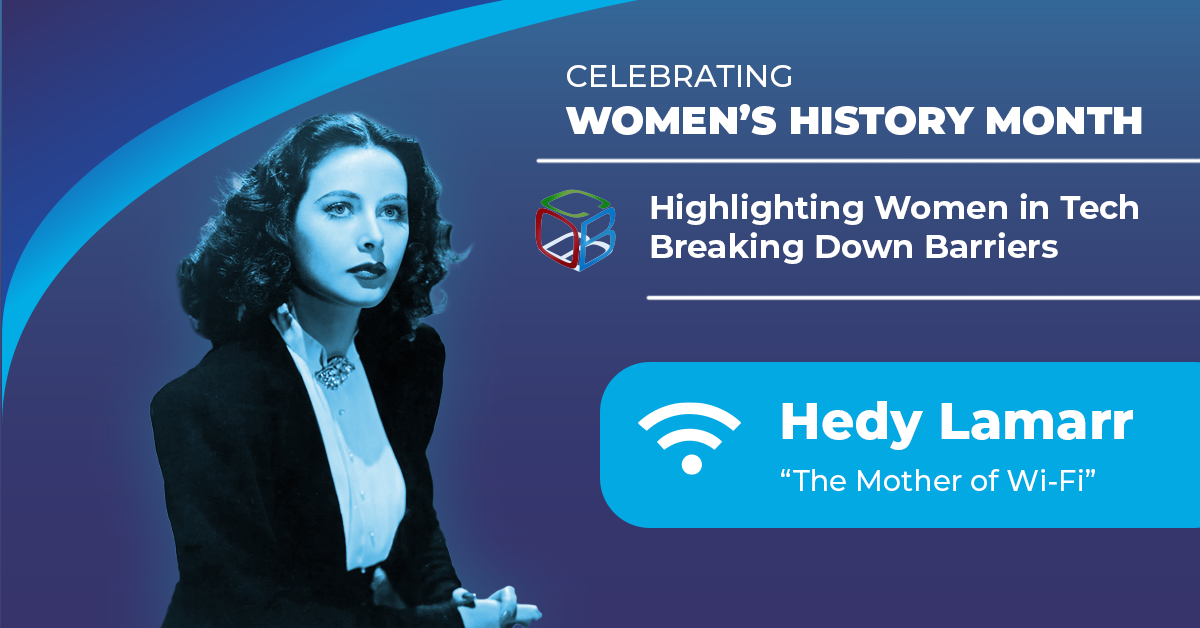
In honor of Women’s History Month, we’re recognizing the groundbreaking contributions of Hedy Lamarr, a Hollywood star and tech innovator whose work helped lay the foundation for modern wireless technology. Her influence extends far beyond the big screen and even beyond wireless communication itself. Alongside many other trailblazing women, Hedy played a pivotal role in breaking down barriers and paving the way for future generations of women in STEM.
Hedy Lamarr (originally Hedwig Eva Kiesler) was born in 1914 in Vienna, Austria. She was a famous actress and tech pioneer during the 1930s and 1940s. Despite natural talent on the big screen at the height of Hollywood's Golden Age, her skills and scientific innovations would have a much bigger impact on the world than any movie Hollywood could ever produce. Lamarr's legacy would later be defined by her development of "frequency-hopping", an early tactic of modern warfare, eventually becoming the basis of what we know today as Bluetooth and Wi-Fi.
Born to a father who was a banker and a mother who was a concert pianist, she would be influenced early on, leading her to take an interest in the arts and engineering. As a child, Lamarr recalls her father taking her on walks and explaining how the newest devices and engineering worked. (often referred to as the "secret communication system"). Lamarr's mother introduced her to ballet and piano. Here she developed her interest in performance and theatre, and eventually would be discovered and cast into the limelight.
Lamarr's career on the big screen began with taking smaller roles with few lines, almost always playing the same or a similar role that diminished her intelligence and personality. After a few lead roles in Europe, Lamarr moved to New York and began to have major success in the 1930s and 1940s with films like "Algiers", "BoomTown", and "White Cargo". However, Lamarr began to grow bored of performing as the "damsel in distress" or the "exotic seductress," and felt like she was not being challenged. With this, she began to study science and engineering.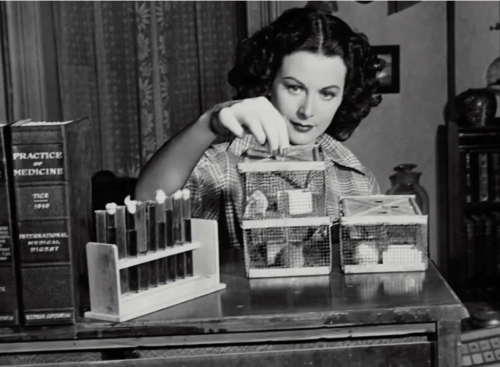
During World War II, she turned her attention to solving a critical problem: how to guide radio-controlled torpedoes and prevent interception or jamming by enemy forces. Alongside composer George Antheil, she developed a system that would rapidly switch between 88 frequencies, with the sender and receiver having to "hop" frequencies simultaneously. This method of communication confused anybody attempting to track the signal, making transmissions more secure.
Antheil and Lamarr submitted the patent for the system in 1942. It was initially rejected despite how groundbreaking it was; the U.S Navy didn't adopt this technique wan't adopted until 20 years later during the 1962 Cuban Missile Crisis, where frequency hopping was used to secure communications and enforce the blockade for U.S naval vessels.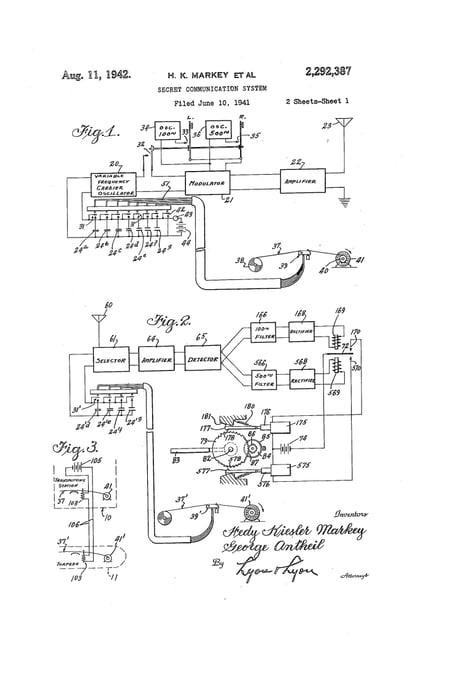
Decades later, the principles behind Lamarr’s invention would become a foundation for secure wireless communication, helping to enable technologies like Wi-Fi, Bluetooth, and GPS, tools that now power everything from office networks to mobile devices and smart workplaces.
At a time when women were not respected or even allowed into male-dominated fields such as science or engineering, Lamarr was developing ideas that would eventually influence the way businesses and individuals connect every day, quietly shaping the future of modern communication.
What makes Lamarr’s story particularly compelling is how long it took for her contributions to be recognized. For years, her invention was overshadowed by her acting career, and it wasn’t until much later in life that she received recognition from the science/engineering community. Today, she is widely acknowledged as a pioneer whose ideas helped lay the groundwork for the connected world we rely on.
Hedy Lamarr passed away on January 19th, 2000, at the age of 85. However, her legacy is especially relevant in today’s business environment, where connectivity is no longer optional; it’s essential. The ability to communicate securely and
reliably across devices, locations, and teams is something many organizations take for granted, yet it’s built on innovations like Lamarr’s. Every wireless network, mobile connection, and cloud-based system traces back to foundational breakthroughs that made seamless communication possible.
Hedy Lamarr’s story is a reminder that innovation can come from unexpected places and that its impact isn’t always immediate. The technologies businesses depend on today didn’t appear overnight; they were shaped by visionaries who saw possibilities others didn’t. As organizations continue to evolve and adopt new tools, her legacy serves as a powerful example of how one idea can influence generations of progress.
“Hedy Lamarr and Frequency Hopping Technology.” SparkFun Electronics, https://news.sparkfun.com/6147
“Hedy Lamarr.” Encyclopaedia Britannica, https://www.britannica.com/biography/Hedy-Lamarr
“Hedy Lamarr.” National Women’s History Museum, https://www.womenshistory.org/education-resources/biographies/hedy-lamarr
“Hedy Lamarr.” National Inventors Hall of Fame, https://www.invent.org/inductees/hedy-lamarr

5 min read
Healthcare organizations don't just need IT support; they need a partner who understands compliance, security, and what's actually at stake when...

9 min read
 Jason Holmes: Jul 28, 2026, 8:53:17 AM
Watch Our Patching and Updating Video Below

8 min read
 Chris Wilson: Jul 1, 2026, 8:00:00 AM
As businesses grow more reliant on digital infrastructure, the need to maintain both system performance and security becomes harder to manage...